On January 1, 2026, the “Measures for the Administration of Used Car Exports” jointly issued by the Ministry of Commerce, the Ministry of Industry and Information Technology, the Ministry of Public Security, and the General Administration of Customs officially came into effect. The introduction of this policy marks that China’s used car export industry has completely left the extensive stage of “scale expansion” and has fully entered a new era of standardized development of “compliance and quality improvement.” The new regulations establish a supervisory system covering the entire process around the three core elements of “traceability of vehicle conditions, safety of funds, and evidence-based rights protection”, providing clear operating guidelines for used car operators.
I. Industry Status and Policy Core Orientation
1. Basic data for industry development
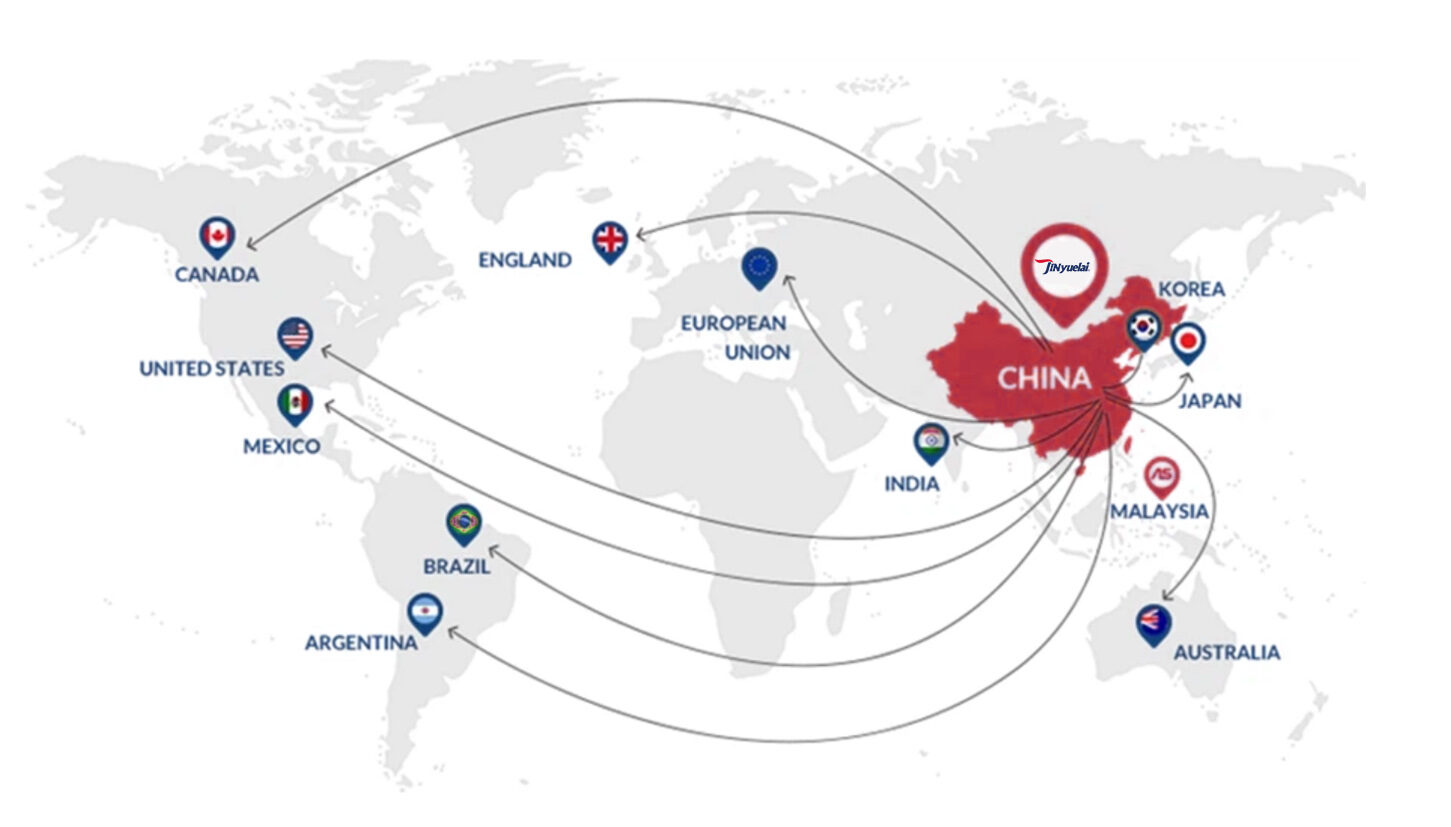
In 2025, China’s used car trading volume broke through the 20 million vehicle mark for the first time, reaching a record high of 20.108 million units, an increase of 2.52% over the previous year, and the cumulative transaction amount reached 1289.79 billion yuan. The sufficient supply of vehicles has built a solid foundation for the used car export business. The export side showed even more impressive performance. In 2024, China’s used car exports reached 436,000 units, a year-on-year increase of 46.5%, and the business covered more than 160 countries and regions around the world. Meanwhile, in 2025, China’s used car exports are expected to exceed 600,000 units. Among them, emerging markets such as Southeast Asia, the Middle East, and Africa account for relatively high demand, while countries such as Algeria and the United Arab Emirates have become the fastest growing core markets.
2. 2026 core policy changes (directly targeting the three major pain points of cross-border transactions)
The new regulations build a regulatory framework around “traceability of vehicle conditions, safety of funds, and evidence-based rights protection”. The core adjustments are directly related to the interests of foreign trade practitioners:
• Disclosure of vehicle conditions: All used cars to be exported must be accompanied by inspection reports from a third party agency approved by the country. Core information such as vehicle accident records, maintenance details, actual mileage, and body structural defects can be included in the unified national data platform. Overseas buyers can scan the code to verify it with one click, completely breaking the cross-border trust barrier.
• Fund supervision: Closed loop circulation of official accounts: Implement a “cross-border fund supervision account” system. Overseas buyers are required to deposit funds into a supervisory account designated by the Ministry of Commerce. After the vehicle has passed inspection and customs clearance, the funds are transferred to the domestic supplier account to solve the problems of “not being able to get the car for payment” and “the deposit is difficult to refund” from the root cause.
• Rights protection guarantee: One refund and three standardization: Suppliers deliberately concealing vehicle conditions such as major accidents, blisters, fires, and meter adjustments constitute fraud. Buyers can return cars and claim triple vehicle payment compensation in accordance with Chinese law. The number of related complaints dropped 50% year-on-year after the implementation of the new regulations.
• New compliance requirements: Vehicle exports that have been registered for less than 180 days must be submitted to the manufacturer’s “After-Sales Maintenance Service Certificate”; the export of modified vehicles must provide complete proof of authenticity; the “Negative List of Dishonest Practices in Used Car Exports” clarifies seven major irregularities, and the offending company will be removed.
II. The whole process of compliance with cross-border transactions
1. Enterprise qualifications and filing requirements
Exporting companies must first complete compliance records. The core conditions include:
• A domestic registered independent legal entity with no record of serious loss of trust, and complies with the requirements of production safety, environmental protection, customs and other regulations.
• Distribution companies must have a fixed place of business and employ at least 3 used car appraisal professionals (providing proof of social security payment).
• Manufacturers are required to be included in the Ministry of Industry and Information Technology’s “Notice on Road Motor Vehicle Manufacturers and Products”, and can only export their products.
• The filing materials were submitted through the “Ministry of Commerce’s Unified Business System Platform”, and the provincial competent department completed the review within 15 working days.
2. Export license application and customs clearance process
• License application: Processed through the unified platform of the Ministry of Commerce’s business system, it is necessary to submit materials such as export contracts (including after-sales service clauses), “motor vehicle registration certificates”, third party inspection reports, target market entry statements, etc. The information must be consistent with the vehicle registration information. The “one batch, one license” system is implemented, and those with complete materials are issued within 3 working days.
• Customs declaration: Submit documents such as export licenses, boxes, invoices, bills of lading, etc. The product name must indicate “old + brand + emissions + model”, fill in the VIN code truthfully, choose a paperless declaration, and the customs can go through online inspection and verification.
3. Modified vehicle export special operation
Additionally, complete proof of the authenticity of the modification must be submitted:
• Detailed explanation of the modifications and comparison photos before and after (front front, left front, front side, tail).
• Vehicle nameplate comparison photos and chassis and special equipment purchase agreements and invoices before and after modifications.
• The corresponding parameter page of the Ministry of Industry and Information Technology’s “Notice on Road Motor Vehicle Manufacturers and Products” of the Ministry of Industry and Information Technology.
• Vehicle and special equipment inspection reports that meet the target country’s entry requirements.
III. 5 Cross-border Pitfall Avoidance Techniques Under the New Regulations
1. Check test reports: lock in compliance qualifications and repurchase guarantees
• The supplier is required to provide reports from platforms with export inspection qualifications such as Dr. Cha and 268V, check the consistency of the report number with the VIN code, and verify the authenticity through the official website or official applet.
• Focus on verifying that structural parts such as stringers and ABC columns are welded without deformation, and the mileage is logically consistent with maintenance records.
• Priority is given to testing services that support the “90-day repurchase guarantee” to reduce cross-border return and exchange costs.
• Confirm testing items according to target market requirements: European 6 standards are required for exports to the EU, DOT certification is required for the US, and special exhaust reports are required for some countries in South America.
2. Nuclear contract terms: refusing vague statements and hegemonic clauses
• Clearly mark “no major accidents, no blisters, no fire, no adjustments”, attach the test report number, and agree in writing that “the vehicle condition is not consistent, one refund is three”.
• Refine customs declaration time limits, logistics liability allocation (compensation for damage or delay in transit), after-sales warranty (new regulations minimum 3 months or 5,000 km, can be extended by negotiation), and implement all commitments in writing.
• Clarify compliance responsibilities: The party that handles certification documents such as emission standards and COC certificates and bears the costs.
• Reject invalid hegemonic clauses such as “vehicle condition is subject to on-site inspection” and “no responsibility once sold”.
3. Follow Supervised Accounts: Avoiding Capital and Exchange Rate Risks
• Request only cross-border fund supervision accounts designated by the Ministry of Commerce from suppliers, and prevent transfers to private accounts or informal third party accounts.
• After the transfer, keep the certificate and receipt, confirm that the fund status is “pending delivery”, and clearly state that the release conditions are “vehicle inspection passed + customs declaration completed + document delivery”.
• If the transaction is interrupted, use the voucher to apply for a refund. Priority is given to multi-currency settlement accounts to avoid the risk of exchange rate fluctuations.
4. Special inspection: Differential inspection of fuel vehicles and new energy models
• Fuel vehicles: Focus on checking engine and transmission conditions, and require recent maintenance records.
• New energy vehicles: A special battery test report must be obtained. The core focus is on battery health (≥ 80%), number of charging cycles, and cross-regional warranty continuity; check the original attenuation data through the car company’s official app or 4S store, mark the health value in the contract, and agree on a treatment plan for excessive attenuation.
• Adapt to regional standards: The Middle East market is concerned about battery explosion-proof cooling requirements, and the South American market needs to provide battery compliance certification.
5. Reserve maintenance fees: control hidden costs
• Funds are set aside for 15% to 20% of the vehicle price to replace wear parts such as engine oil and tires, repair minor defects, and target market compliance modifications such as emission upgrades, lighting adjustments, and language adaptation.
• Record maintenance projects and estimate costs during vehicle inspections, and negotiate price reductions with suppliers or complete basic maintenance ahead of schedule.
• Prioritize vehicles that provide a clear maintenance list, specify items, consumable specifications and costs, and avoid hidden expenses.
IV. 2026 Market Trends and Business Suggestions
1. Market trends
• Price differentiation: Prices of independent new energy brands are relatively strong, mainstream fuel joint ventures are slowly declining, and luxury fuel vehicles and unpopular new energy models are depreciating significantly.
• Market diversification: Consolidate core markets along the “Belt and Road”, expand to emerging countries in Europe, Latin America and Africa, and reduce dependence on the single market.
• Service upgrade: From simple car sales to a “vehicle source certification+ local after-sales + parts supply” model, overseas authorized service points have become the key to competition.
2. Practical management suggestions
• Adhere to the bottom line of compliance: Establish a document review mechanism, and a dedicated person is responsible for license application and cancellation, and track policy changes in target countries.
• Technology empowers efficiency: Use AI inspection tools and third-party inspection agencies to ensure transparent vehicle conditions and predict residual values through intelligent valuation systems.
• Resource integration and cost reduction: Cooperate with leading platforms and overseas maintenance plants to build parts supply networks to reduce after-sales costs.
• Accurate layout area: Select vehicle sources according to target country emissions and driving system (left/right steering), focusing on the incremental NEV market.